Less than one in three employees has ever taken a day off for mental health, even though 77% of individuals regularly experience physical symptoms brought on by stress, according to the American Institute of Stress. Early detection of warning indicators can help avoid long-term physical sickness, mental problems, and chronic burnout.
Why Your Brain Needs a Mental Health Day
Our culture today praises hustle. The phrases “push through,” “stay productive,” and “just one more task” have grown so commonplace that most individuals aren’t aware when they’re running low. In actuality, like your heart, your brain is an organ. It requires relaxation, recuperation, and sporadic maintenance.
Taking a mental health day is not a luxury or a show of weakness. It’s a calculated, fact-based choice that safeguards your long-term welfare, emotional stability, and cognitive function. However, most people never learn how to know when to take one.
If you’re already feeling overwhelmed, understanding why managing anxiety and stress is important, and how to handle it effectively, is essential. You can explore deeper strategies in this guide on managing anxiety and stress:
Early awareness is the key to avoiding full burnout.
The ten most telling warning signs your body and mind are giving you are listed below, along with reasons why ignoring them is considerably more expensive than taking a day off.
Key Takeaways: Early Indicators of Workplace Burnout
Before you dive in, read these:
- Persistent exhaustion, which sleep cannot alleviate, is one of the most obvious indicators of emotional burnout.
- Increased irritation or emotional reactivity frequently indicates an overloaded nervous system.
- Headaches, tightness in the chest, and stomach problems are all signs that your body is under stress.
- One cognitive indicator of depletion is the inability to focus or persistent mental haze.
- Loss of motivation, cynicism, and social disengagement are warning signs of more severe burnout.
- Recovering from burnout is more expensive than taking a proactive mental health day.
Why is Taking A Mental Health Day Not Optional; It’s Medical?
Burnout, according to the World Health Organization, is an occupational condition marked by
- Diminished professional efficacy
- Greater mental detachment from work
- Tiredness
In contrast to short-term fatigue, burnout is a long-term condition that alters your stress response, impairs your immune system, and dramatically increases your chance of developing anxiety and depression.
Your cortisol levels will return to normal, your prefrontal cortex, the brain’s decision-making center, will repair, and your emotional regulation systems will recalibrate if you take a mental health day. Rest is beneficial, according to scientists.
No light comes from an empty lantern. The fuel that keeps your light shining brightly is self-care.
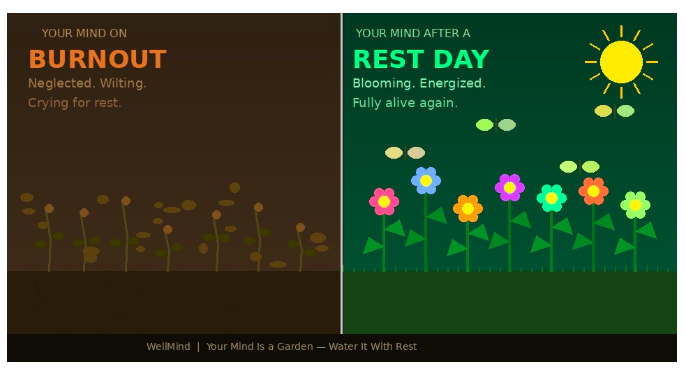
10 Signs You Need a Mental Health Day
1. Constant Fatigue Even After Sleep Indicates Emotional Burnout
Physical rest isn’t solving the underlying issue when you’re still dragging through the morning after eight hours of sleep. At the physiological level, emotional tiredness depletes you because persistent stress causes your body to release inflammatory cytokines that disrupt restorative sleep patterns. If you wake up scared or tired, your nervous system is in survival mode.
Tip: For five days, compare your mood and the quality of your sleep. The problem is emotional rather than physical if energy levels do not correspond with sleep duration.
2. Getting Easily Irritated Is a Warning You Need a Mental Health Day
Your ability to control your emotions is weakened when you lose your temper over small annoyances, cry during advertisements, or become enraged over a sluggish internet connection. Under prolonged stress, your brain’s threat-detection region, the amygdala, becomes overactive, reducing your emotional reactivity threshold. This is neurological depletion, not a fault in character.
Tip: Take note of whether your feelings seem “outsized.” It’s a warning indication if you apologize for reactions more than twice in a single day.
3. Trouble Concentrating or Completing Tasks Is a Burnout Sign
Mental overload is characterized by cognitive symptoms such as
- Brain fog
- Difficulty starting task
- Losing basic information
- Repeatedly reading sentences.
Chronic overwork of the prefrontal cortex causes working memory to deteriorate, decision fatigue to start early, and tasks that once took 30 minutes to complete now take two hours. It is evident that this “cognitive fog” is a neurological emergency.
Tip: Your brain requires rest, not caffeine, if your productivity has decreased by 50% or more without any apparent cause.
4. Physical Stress Symptoms Like Headaches Show You Need a Mental Health Break
Your body doesn’t distinguish between mental and physical health, as seen by symptoms like:
- Tension headaches
- Clenching of the jaw
- stiff shoulders
- unsettled stomach
- recurrent illness
- tightness in the chest
Prolonged psychological stress constantly activates the sympathetic nervous system, which results in muscle tension, inflammation, and weakened immunity. Frequent bodily problems without a medical explanation trigger your body’s stress alarm system.
Tip: Do a physical scan every morning as a tip. An obvious symptom of stress is when there are more than two physical discomforts that have no apparent reason.
5. Losing Interest in Joyful Activities Signals Mental Health Depletion
One of the most overlooked symptoms of burnout and early depression is anhedonia, which is the inability to derive pleasure from past actions. When prolonged stress depletes your dopamine system
- Hobbies become meaningless
- Socializing becomes a burden
- Activities that once gave you energy now demand it
This is a neurochemical deficiency, not a case of laziness.
Tip: List five things you loved in the past. Your reward system needs a break if thinking about them makes you feel nothing.
Rest is the cornerstone of productivity, not its lack. Taking a mental wellness day replenishes the energy that stress saps.
6. Avoiding Social Interaction Is a Key Sign of Workplace Burnout
One of the biggest warning signs of social withdrawal is avoiding discussions you might normally enjoy, canceling plans, and isolating yourself from friends. Connection is ingrained in human neurobiology; if you no longer feel the need to connect, your stress load has probably surpassed your tolerance. Ironically, accessing the social support that could be helpful seems like too much work.
Tip: Recognize the difference between persistent avoidance and healthy introvert recharge. Isolation should be addressed if it has persisted for more than a week without a satisfactory explanation.
7. Using Unhealthy Coping Mechanisms Means You Need a Mental Health Day
Behavioral indicators of emotional avoidance include
- Excessive computer time
- Obsessive shopping
- Stress eating
- Increased alcohol consumption
- Hours of doom-scrolling
The mind looks for dopamine shortcuts when it is overloaded. Your underlying emotional needs are unfulfilled and begging for attention if you notice yourself reaching for these diversions more regularly.
Tip: A good question to ask yourself is, “Am I doing this to enjoy it, or to avoid feeling something?” The response indicates if it’s coping or recreation.
8. Cynicism and Loss of Motivation Are Signs of Emotional Burnout
Depersonalization, a defining feature of clinical burnout, occurs when your passion for your profession, relationships, or life goals is replaced by cynicism, bitterness, or the sense that nothing matters. This is a self-defense strategy your psyche uses when it has been operating on empty for too long without recognition or healing; it is not a personality change.
Tip: “Was I this cynical 6 months ago?” is a good reflection exercise. A substantial change in perspective calls for reflection and candid self-evaluation.
9. Making More Mistakes Than Usual Shows Your Brain Needs Rest
Missing information, thoughtless mistakes in work you’d typically do flawlessly, and forgetting crucial appointments are all cognitive slips that indicate your working memory and attentional resources are running low.
High levels of stress combined with even minor sleep deprivation might impair decision-making just as much as alcohol intoxication, according to Harvard Medical School research. You’re literally running out of headspace.
Tip: Your brain is almost completely spent if you’ve had to repeat assignments or apologize for mistakes several times this week.
10. Thinking “I Just Need a Break” But Never Taking One Is a Red Flag
The constant, nagging feeling that you need to sleep badly, yet consistently ignore it, is perhaps the most ignored warning sign. The most immediate communication from your mind is the fact that this concept continues coming back to you. Ignoring it exacerbates the depletion rather than eliminating the urge. The most effective kind of self-advocacy is to pay attention to this signal before it becomes more serious.
Tip: Your mind is now pleading rather than asking if the thought “I need a break” has come up more than three times this week.
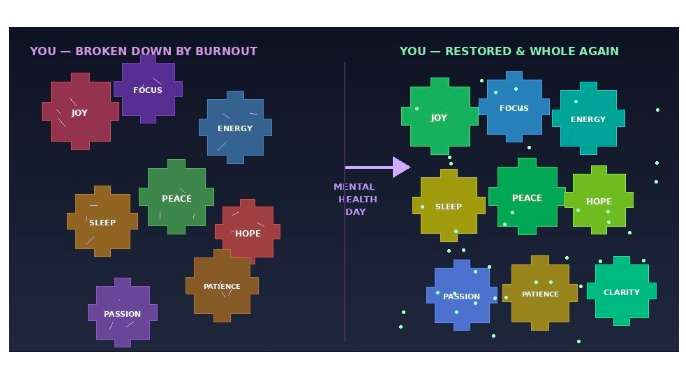
What a Mental Health Reset Day Should Actually Include
Avoiding emotions by binge-watching or endlessly scrolling is not the purpose of a mental health day.
Your nervous system should be regulated by a real reset.
Ideas for a healthy reset include:
- Dozing off without an alarm
- Yoga or light stretching
- Nature hikes
- Keeping a journal of feelings and ideas
- Digital detoxification
- Reading for enjoyment
- A session of therapy or counseling
- Breathing techniques for mindfulness
- Playing soothing music
Restoration, not productivity, is the aim.
The Long-Term Risks of Ignoring Burnout Signs
If left untreated, emotional exhaustion can result in:
- Prolonged anxiety
- Depression
- Sleeplessness
- Elevated blood pressure
- Immune system weakness
- Decreased productivity at work
- Relationship stress
Understanding emotional burnout symptoms early helps prevent more serious consequences.
The Bottom Line
Taking care of your mental health on the weekends is not a good idea. It serves as the operating system for all of your thoughts, feelings, and actions. It is scientifically sound, strategically sound, and personally vital to take a mental health day when these warning flags arise.
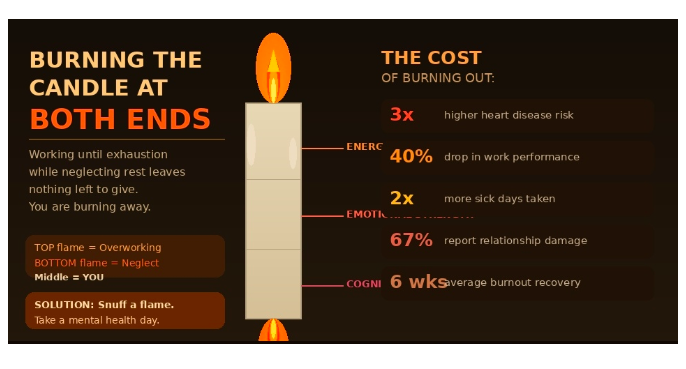
Ignoring these indicators always comes at a higher cost than stopping. While a single restorative day just costs hours, recovering from burnout takes weeks or months. One characteristic unites the most resilient, successful individuals in any field: they know when to give up so they may continue.
Think of this as your professional prescription to take that day if you identified with three or more of these symptoms today.
FAQs: Warning Signs You Need a Mental Health
How often should you take a mental health day?
Mental health practitioners generally recommend at least one dedicated mental health day per month, with the recommendation increasing during periods of severe stress, although there is no definitive rule. Being proactive instead of reactive is crucial; you should take action when you see early warning indicators rather than waiting until you’re completely burned out. Imagine it as the preventive care of your most vital organ.
Is it okay to call in sick for a mental health day?
Indeed, mental well-being is a component of physical well-being. Mental health days are covered under sick leave regulations in several nations and workplaces. You are not required to give your employer specifics. You can just state that you need a day to recuperate since you’re sick. Mental health days are becoming less stigmatized, and many progressive employers now openly endorse them. A valid medical justification for your absence is your well-being.
What should you do on a mental health day to actually recover?
Real relaxation and nervous system recuperation are essential components of effective mental health days; simply switching screens is not enough. Think of things like taking nature walks, journaling, performing yoga or gentle stretching, being out with positive people, engaging in creative hobbies, or just sleeping and doing nothing. Don’t overburden yourself with productive things. Restoring, not achieving, is the aim.
Can a single mental health day fix burnout?
Burnout cannot be completely reversed in a single day, even while it can offer significant relief and stop escalation if the underlying reasons (workload, environment, and lack of support) do not improve. Consider it as emergency first aid: vital, but not a substitute for treating the underlying issues. Consult a therapist or mental health specialist if you’re already experiencing severe burnout.
How do you convince yourself a mental health day is worth it?
Rethink rest as an investment rather than a cost. Research consistently shows that a single day of appropriate recuperation can restore cognitive function, emotional control, and creative ability. Your productivity in the days that follow will frequently increase tenfold for every hour you spend recuperating. Think about the alternative: carrying on for days or weeks at a reduced capacity, making more mistakes, feeling worse, and possibly requiring much more time to recover. The equation is simple: one day now vs two weeks later.